


If your child has just finished PSLE or recently entered Secondary 1, you may already be noticing something: “Math feels very different now.”
Many students who were doing well in Primary school suddenly struggle in Sec 1. This is normal—and with the right support, it can be managed early.
This guide breaks down the “Sec 1 Math syllabus, Singapore” parents need to understand and how you can help your child adjust confidently.
Why the Transition from Primary to Secondary Math is So Tough:
- The jump from primary to secondary maths is not just about harder questions
- It’s a “complete shift in how maths is taught and understood”.
In Primary school
- Students relied heavily on the “model method (bar models)”.
- Questions are more structured and guided
In Secondary school:
- Math becomes “abstract”
- Students need to use “algebra and formulas”
- There is less step-by-step guidance
This is where many students struggle.
They are used to:
- “Show me how to do it.”
But Sec 1 requires:
- “Figure out which method to use.”
- Another key challenge is “speed and independence”.
Teachers move faster, and students are expected to.
- Take notes
- Follow explanations quickly
- Practise independently
If the foundation is not strong, gaps show up very quickly.
Key Topics in the Sec 1 Math Syllabus
Understanding what your child is learning helps you support them better.
Here are the main areas in the “Sec 1 Math syllabus Singapore”:
1. Algebra
This is the biggest shift.
Students learn:
- Using letters (x, y) to represent numbers
- Simplifying expressions
- Solving equations
Example:
2x + 3 = 11
This is new for many students and often confusing at first.
2. Negative Numbers
Students move beyond whole numbers.
They learn:
- Positive and negative values
- Operations with negative numbers
Example:
-3 + 5 = ?
Mistakes here are very common early on.
3. Ratios and Proportions
This builds on Primary concepts but becomes more complex.
Students must:
- Compare quantities
- Solve multi-step ratio problems
4. Geometry
Students are introduced to:
- Angles
- Basic shapes and properties
They must understand concepts, not just memorise
5. Statistics and Data
This includes:
- Reading graphs
- Interpreting data
- These questions test understanding, not just calculation.
The key difference is this:
Topics are more concept-based, not just procedural
Common Mistakes Sec 1 Students Make
Many parents assume their child is “not good at maths” when results drop.
But often, the issues are very specific
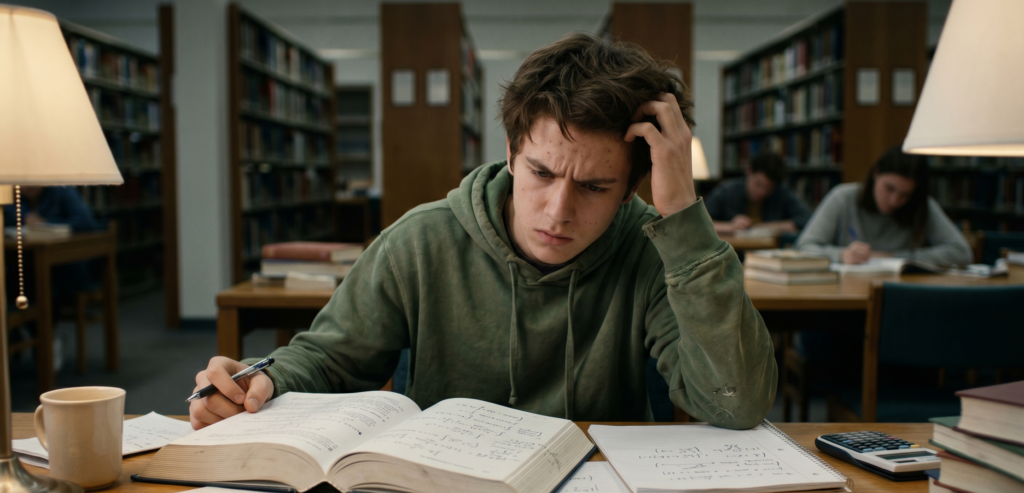
1. Not understanding algebra basics
Students treat algebra like arithmetic.
They:
- Try to “guess” instead of solving properly
- Don’t understand what the variable represents
2. Weak foundation from Primary school
Topics like:
- Fractions
- Decimals
Still matters.
If these are weak, Sec 1 topics become harder.
3. Rushing through questions
Students try to apply familiar methods quickly.
But Sec 1 questions often require the following:
Slower thinking and correct method selection
4. Not showing working clearly
In Secondary school:
- Method marks matter more
- Steps must be clear
Messy or incomplete work leads to lost marks.
5. Lack of practice consistency
Unlike Primary school, last-minute revision doesn’t work well.
Students need:
- Regular, steady practice
How You Can Support Your Child at Home
You don’t need to be a maths expert to help. Small actions can make a big difference. Focus on understanding, encourage step-by-step working, and don’t ignore small gaps. For more structured tips, you can also check out this helpful guide from the National Library Board on supporting your child’s learning. Consistency matters more than intensity.
Small actions at home can make a big difference.
1. Focus on understanding, not memorising
Instead of asking:
“Did you get the answer?”
Ask:
- How did you solve it?
- This builds deeper thinking.
2. Encourage step-by-step working
Even if your child thinks it’s slow.
Clear steps help:
- Reduce mistakes
- Improve confidence
3. Don’t ignore small gaps
If your child struggles with:
- Basic fractions
- Simple algebra
Address it early.
These gaps grow quickly if ignored.
4. Build a routine
Consistency matters more than intensity.
Even:
- 20–30 minutes a day
Is better than long, irregular sessions.
5. Stay calm about mistakes
Mistakes are part of the transition.
What matters is:
- Learning from them, not avoiding them
When to Consider Secondary Math Tuition
Sometimes, home support is not enough—and that’s okay.
You may want to consider structured help if your child:
- sudden drops in grades
- Feels confused by algebra
- Avoids maths or loses confidence
- Cannot keep up with the school pace
It should:
- Explain concepts clearly
- Break down problem-solving methods
- Build confidence step by step.
Most importantly, it should help students understand:
Why a method works, not just how
Supporting Your Child Through the Transition
The transition to Sec 1 maths is one of the biggest academic shifts in Singapore’s education system.
Struggling at the start is common—but it doesn’t have to continue.
With:
- Early support
- Consistent practice
- Clear guidance
Students can regain confidence and perform well.
At SkillsUp Tuition, our Secondary Math Zoom classes are designed specifically for this transition. We focus on:
Building strong algebra foundations
Step-by-step problem solving
Small group teaching for better support
If your child is finding Sec 1 maths challenging, the right guidance can make a big difference.
Visit “skillsuptuition.com” to learn more about our secondary math classes.